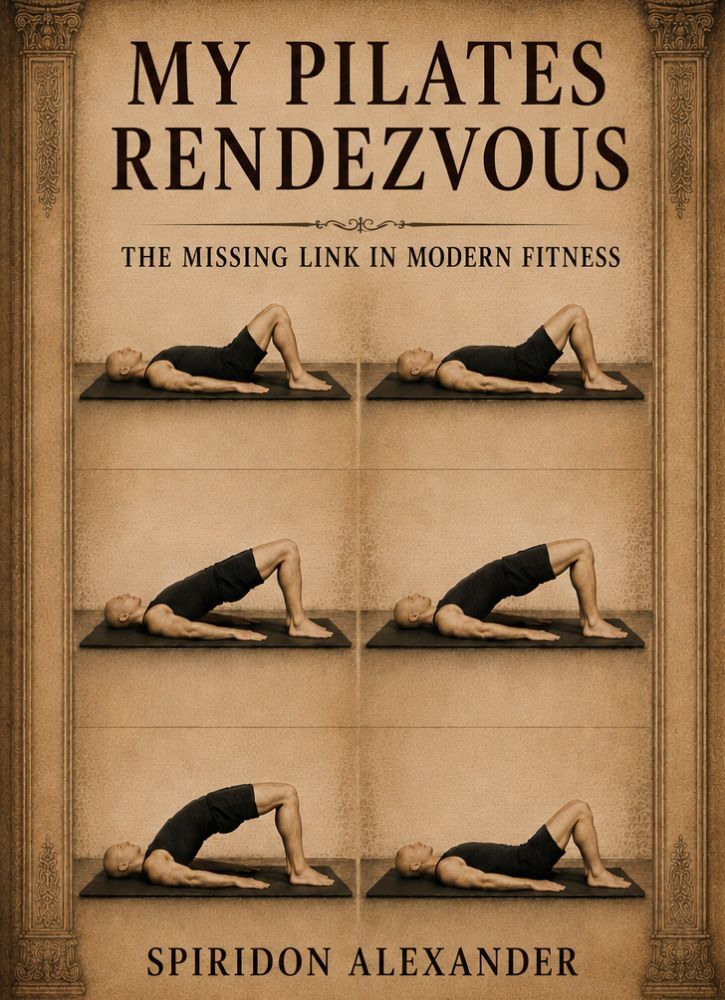
The question that stayed with me after My Pilates Rendezvous was not “Is Pilates better than everything else?” It was simpler and more useful than that: what if strength is supposed to make life larger, not just harder?
Spiridon Alexander writes from the far side of pain, which changes the tone immediately. He is not speaking as someone casually optimizing a routine. He is speaking as someone who needed his body back. That gives the book a human gravity many fitness titles never reach, no matter how polished their advice is.
I was especially drawn to the sections where movement becomes a way of paying attention. Alexander’s discussions of posture, coordination, and capability keep circling the idea that the body is not a machine to be bullied into compliance. It is an instrument that responds differently when approached with intelligence.
The book is not always balanced. Its critique of modern fitness can flatten the complexities of what other methods do well. But there is still a real shelf-life to the deeper argument here, because it keeps asking what kind of movement leaves a person more inhabitable to themselves. That is the sort of question worth carrying around.